


A modern garden is not just a backdrop for the home, but a fully-fledged space for living, relaxation, and gathering. A modern, minimalist garden in front of a house should create a harmonious and functional space that highlights the building's architecture. Designing a garden around a new house requires consistency with the building's architecture, thoughtful selection of plants, lighting, and functional solutions that emphasize the space's modern character and create a space conducive to relaxation.
What characterizes a modern garden?
A modern garden is based on principles such as minimalism, simple lines, and geometric forms. Subdued colors, structured vegetation, and materials such as glass, metal, and architectural concrete dominate. This creates a cohesive, harmonious garden design that emphasizes the elegance of a modern home's surroundings.
Lighting – Think Outside the Box…More Than Just Garden Garlands
Lighting in the garden serves not only a practical purpose but also a decorative one. As previously mentioned, a modern garden is characterized by simplicity and cohesion, so appropriate lighting should highlight its features and bring out the beauty of flowering plants, trees, and paving. Lighting in a modern garden often emphasizes the simple forms and geometric lines of paths and flowerbeds. Instead of classic garlands, it's worth considering architectural solutions – lamps built into the paving, wall sconces on the facade, or minimalist light posts, which combine decorative character with practicality.
Using LED lighting in the garden
In light of the facts presented, LED lighting is the best choice for modern gardens. It's energy-efficient, weather-resistant, and allows for the creation of a variety of effects—from subtle illumination of flowerbeds to more striking accents along paths. Modern gardens also often utilize decorative lamps in the form of metal or glass spheres, which complement the modern character of the space. It's worth remembering that LED lighting can also be used in planters, creating an exceptionally striking, decorative accent in the evening.
Private relaxation area in the garden with sauna

A modern garden isn't limited to greenery and furniture. More and more often, investors are choosing to create private relaxation area in the gardenA garden sauna is a solution that combines aesthetics with functionality and offers a range of health benefits. Regular sauna use promotes circulation, reduces stress and muscle tension, and improves the body's immunity. From a functional perspective sauna It becomes a place of relaxation on cold days, and from an interior design perspective, it adds a luxurious touch to the space. Remember, a sauna blends perfectly with other elements, such as a bench or modern seating, creating a cohesive whole. A modern garden is a place where a spa area, jacuzzi, or sauna can become the focal point of the garden design. Remember, a sauna blends perfectly with other elements, such as a bench or modern seating, creating a cohesive whole.
-
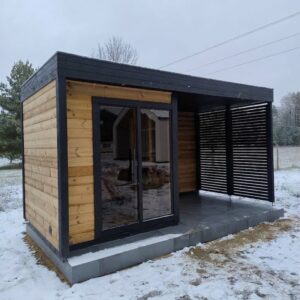 Sauna with Spa Terrace49,000.00zł
 -
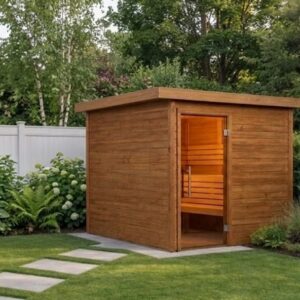 Sauna Zakopane22,900.00zł
 -
Product on sale
 Outdoor sauna for 4-6 peoplePierwotna cena wynosiła: 32,900.00zł.24,900.00złAktualna cena wynosi: 24,900.00zł.
 -
Product on sale
 Wooden barrel sauna for 2-6 peoplePierwotna cena wynosiła: 36,900.00zł.22,900.00złAktualna cena wynosi: 22,900.00zł.
You can read more about what is better to choose – a sauna or a jacuzzi – in the post: https://spasauna.pl/co-lepsze-sauna-czy-jacuzzi-co-warto-kupic/
Garden furniture – how to choose the right style and function?
We've previously highlighted the importance of lighting, and now we're moving on to furniture, which is an integral part of any garden design. To ensure a cohesive space, it's important to ensure the furniture's style complements the home's architecture and the needs of its occupants. Modern garden furniture should be characterized by a minimalist design, simple lines, and materials such as metal, aluminum, or wood. In practice, this means that garden furniture should not only be aesthetically pleasing but also resistant to moisture, UV radiation, and changing weather conditions.
Materials from which garden furniture is made
Choosing the right material for your garden furniture is a key element in designing a patio or landscaped garden. It determines not only the look but also its durability, comfort of use, and ease of maintenance. Different materials give a space a completely different character – wood brings natural warmth, aluminum or steel emphasize modern architecture, and technorattan and composite materials combine decorative effect with high weather resistance.
- Wood – natural, warm, and elegant, but requires regular impregnation and oiling. The most durable species are teak, acacia, and eucalyptus.
- Composite – a modern material combining the look of wood with the durability of plastic. Easy to maintain and durable, ideal for modern interiors.
- Aluminum – lightweight, resistant to corrosion and changing weather conditions, great for simple, minimalist spaces.
- Steel – very solid and stable, especially in powder-coated or stainless steel versions. It gives the garden a modern, slightly industrial character.
- Technorattan – lightweight, aesthetic, and exceptionally weather-resistant. It combines a decorative braided effect with high durability and ease of care.

Which is better, rattan or technorattan?
Have you ever wondered if classic rattan is worth the investment? It's a beautiful, yet demanding, solution. Natural rattan is delicate and requires winter storage, whereas technorattan excellent works well all year round, even in a sunny or semi-shaded garden. This is why technorattan is the choice for most modern gardens – it's more durable and easier to maintain.
What plants for a modern garden?
A modern garden is incomplete without carefully selected plants. As mentioned, modern garden designs are guided by the principle of "less is more." It's better to choose a few varieties that recur within the design and create a cohesive whole than to plant dozens of species that will create chaos. Carefully selected plants not only enhance the landscape but also enhance the functionality of the garden – they provide shade, protect from the wind, and naturally complement the house's architecture.

Perennial Garden Plants You Can't Miss
Perennial plants are the foundation of any modern garden, providing a decorative effect regardless of the season. They provide structure and a green backdrop for other, more decorative species. Modern arrangements often incorporate evergreens, perennials, and plants with simple forms.
It's worth considering boxwoods shaped into geometric shapes, roses as an elegant color accent, or ivy, which works well on pergolas and fences. Evergreen shrubs such as mahogany, holly, and various varieties of conifers allow you to enjoy greenery even in winter, while requiring relatively little maintenance. Thanks to them, the garden area remains attractive year-round, regardless of weather conditions.

Seasonal Garden Plants – What to Plant in Spring, Summer, Fall and Winter
While perennials form the foundation of the composition, seasonal flowers bring dynamism and changeability, bringing a constant sense of life to the garden. In spring, it's worth planting tulips, hyacinths, and daffodils, which will brighten the space with the first bursts of color. In summer, lavender, hydrangeas, and roses dominate, blooming long and profusely, especially in sunny locations. Autumn is the time of heather, ornamental grasses, and chrysanthemums, which blend beautifully with the changing foliage of trees. In winter, when most species are dormant, junipers, red-fruited holly, and other evergreen shrubs take on the decorative role.

Surfaces and hard materials for a modern garden
When designing a modern garden, paving plays a key role. Architectural concrete is elegant and minimalist, large-format paving stones emphasize geometry, and composite decking is natural in appearance yet durable. Straight lines and geometric paths are key elements of modern garden design. Gravel or grit add a touch of lightness, while stepping stones create practical paths that require minimal maintenance. It's important to ensure the materials are non-slip and easy to clean.
Grass and walking space – how to plan?
Lawns are the heart of modern gardens, but it's important to remember that they shouldn't be overly trampled. Patio slabs, geogrids, or gravel paths offer solutions that protect the grass while creating a decorative effect. This enhances the garden's aesthetic appeal and reduces maintenance time.
Smart garden and irrigation systems – do they make sense in a modern garden?
As already demonstrated, a modern garden is not just about plants and furniture, but also about technological solutions. Automatic irrigation systems allow you to care for your garden even in your absence, while a smart garden helps you control watering, soil moisture, and sunlight. This is especially important in larger areas where manual watering would be too time-consuming. This allows you to design a modern garden that is both aesthetically pleasing and easy to maintain.
Differences in designing large and small gardens
Analyzing the previous points, it's clear that the garden's surface has a huge impact on the design. Garden architecture must always be adapted to the available space, as this determines the selection of elements, plants, and materials.
In the case of large gardens, the design possibilities are almost limitless. Within this vast space, you can plan a gazebo, a private green nook, or even several separate zones – for example, a decorative area with flowering beds, a functional area with a vegetable garden, and a recreational area. A particularly interesting solution is arrangement of a jacuzzi in the garden, which in a larger space can become the true heart of a relaxation area and a meeting place for the whole family. Large gardens also allow for the introduction of vigorous trees, wide lawns, and water features that emphasize the natural character of the space.

Completely different rules apply when designing small gardens. Here, every square meter of space matters, so care and moderation are essential. As we noted earlier, it's better to choose a few recurring plant species and simple surfaces than to overload the space with too many elements. In a small garden, it's worth using planters and seats with hidden storage, and ensuring lighting, which will visually enlarge the area. A small space is perfect for small jacuzzisthat can accommodate 2 or 3 people. Too many decorative details will make the garden lose its harmony and make it seem cramped.
-
 Steel TechTub – Steel Spa Bathtub 4-8 Person0.00zł
 -
Product on sale
 ECO BATHTUB TechTub X2.4 – 4-PERSON – WITH HYDROMASSAGEPierwotna cena wynosiła: 17,900.00zł.16,900.00złAktualna cena wynosi: 16,900.00zł.
 -
Product on sale
 ECO BATHTUB TechTub X5.6 - 6-PERSON - WITH HYDROMASSAGEPierwotna cena wynosiła: 26,900.00zł.19,900.00złAktualna cena wynosi: 19,900.00zł.
 -
Product on sale
 LENA - 3-PERSON - SPA GARDEN BATHTUB WITH HYDROMASSAGEPierwotna cena wynosiła: 41,900.00zł.29,900.00złAktualna cena wynosi: 29,900.00zł.
A modern garden on a slope – is it possible to design it?
A garden on a slope is a challenge, but also a huge opportunity to create a unique design. Instead of struggling with the slope, take advantage of it by designing earthen terraces, retaining walls, or garden steps, which will facilitate movement and give the entire area a geometric order. Groundcover plants and species that tolerate partial shade and various soil types will naturally protect the slope from landslides. Such solutions give the garden character and depth, while remaining functional and easier to maintain.
Investing in a swim pool
Both the garden on a flat surface and the garden on a slope also offer the possibility of installing swim pool, which fits perfectly into a modern design and gives the space a unique character. Thanks to the difference in levels, the pool basin can be incorporated into the design, becoming a focal point and an ideal place for recreation. However, it's important to remember that installation on a sloping surface requires proper preparation – solid foundations, slope stabilization, and often the use of retaining walls are necessary. Professional construction will ensure not only safety but also the durability of the entire structure.
If you are wondering whether to choose a swimming pool or a jacuzzi for your garden, we encourage you to read the following post: https://spasauna.pl/jacuzzi-ogrodowe-czy-basen-w-co-warto-zainwestowac-na-caly-rok/
Garden design mistakes – pay attention to them
Note that the most common design mistakes stem from a lack of planning and rushing. Here are the five most important ones to avoid:
- Lack of a plan – a garden designed without a sketch and consideration of needs becomes chaotic and difficult to maintain.
- Excess plant varieties – too many species lead to visual clutter and make coherent cultivation difficult.
- Ignoring soil conditions and sunlight – random selection of plants means they do not develop properly and the arrangement quickly loses its charm.
- Lack of stylistic consistency – combining random decorative elements that do not match the architecture of the house destroys the harmony of the design.
- Overloading the space – too much furniture, flower pots and flowering beds makes the garden lose its function as a place of relaxation and becomes overwhelming.
Place, architecture and principles of arranging a modern garden
A modern garden around the house is a space where not only beauty is important, but also functionality and harmony with the surroundings. The location of the garden should be adapted to the terrain, sunlight, and soil conditions. The house's architecture determines the entire design – from the selection of plants and surfaces to furniture and decorative elements. The principles of modern garden design are based on coherence, moderation, and a balanced design that combines aesthetics with ease of use. This makes the garden a natural extension of the home, a place for rest and daily relaxation.
FAQ – frequently asked questions
1. How to arrange a modern garden at home?
To design a modern garden, it's worth starting with a concept that embraces simplicity, cohesion, and functionality. A well-thought-out design that incorporates paths, relaxation areas, and appropriate planting is crucial. A minimalist composition of plants and materials is a good solution, creating a minimalist garden with an elegant character. Such a garden is not only aesthetically pleasing but also easy to maintain and comfortable to use.
2. How to design a garden to make it functional?
To design a modern garden, you need to combine aesthetics with practical solutions. It's worth incorporating relaxation areas, walkways, and decorative elements that enhance the space's style. Ponds are also a good idea, as they bring a tranquil and natural atmosphere to the garden. This creates a garden idea that is both modern and comfortable for the household.
3. What plants will work well in a modern garden?
In modern designs, a modern garden with grasses is very popular, lending a sense of lightness and elegance to the space. In addition, evergreen shrubs and perennials are also used, which complement simple flowerbeds. It's important to keep the plantings organized and repetitive, which emphasizes the garden's minimalist character. This ensures an aesthetically pleasing overall appearance and creates a cohesive composition year-round.
4. What materials work best in a modern garden?
Modern-style gardens most often utilize architectural concrete, wood, glass, and metal. These materials emphasize a minimalist garden and lend the space an elegant and modern character. A well-planned garden is characterized by a well-thought-out design that combines various textures and colors into a cohesive whole. This makes it easier to design a modern garden that is both aesthetically pleasing and functional.


